BMW Unveils the Eighth-Generation 2027 3 Series with Neue Klasse Design and a 437-HP M350
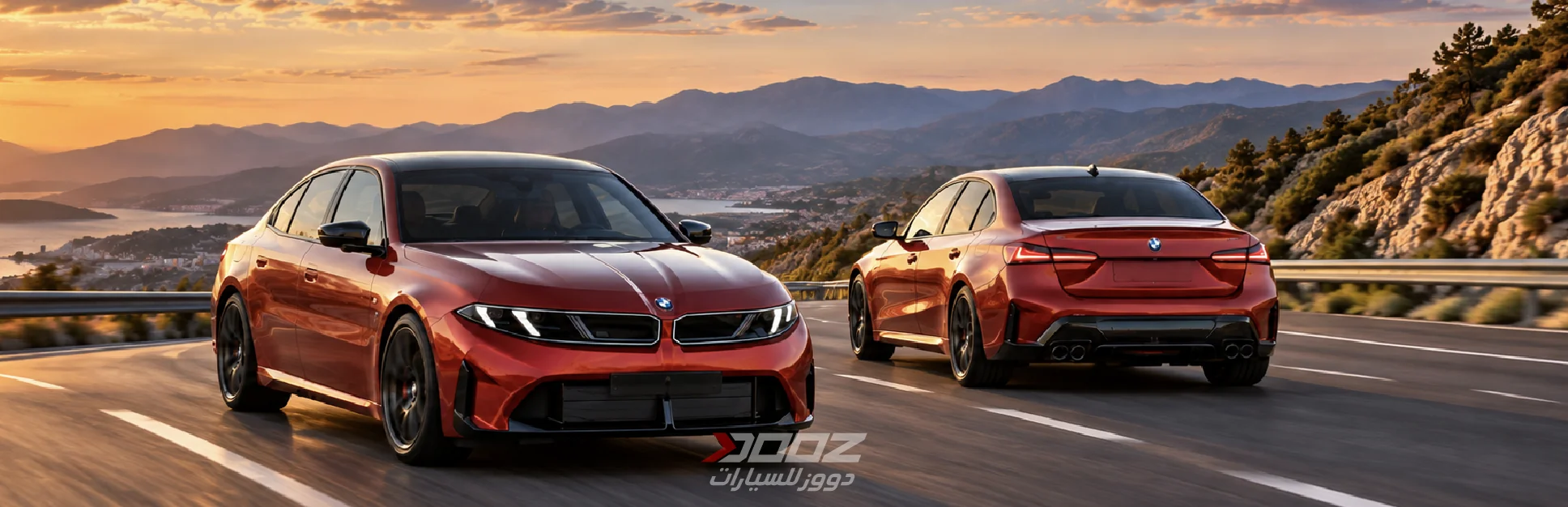
BMW has officially unveiled the all-new eighth-generation BMW 3 Series 2027, carrying the G50 designation and entering a new era inspired by the brand’s Neue Klasse design philosophy. The new model receives extensive updates to its exterior design, technology, interior, and powertrains.
The new 3 Series will be offered with mild-hybrid gasoline engines, alongside the all-electric BMW i3, which represents the first fully electric 3 Series within the new generation.
The 3 Series continues to play a central role in BMW’s lineup, with more than 18 million units sold over more than five decades. The new generation represents one of the biggest transformations in the model’s history, combining a new design language with advanced digital technologies and multiple powertrain options.
New Design Inspired by Neue Klasse
The 2027 BMW 3 Series features a completely redesigned exterior based on the Neue Klasse design language, which has already been showcased prominently on BMW’s latest electric models.
The front end features a smaller kidney grille that is more closely integrated with the headlights and sensors, along with a horizontal lighting design that visually stretches across the width of the front fascia. Vertical daytime running lights give the new 3 Series a distinctive identity compared with its predecessor.
BMW has also revived some of its classic design cues through what it calls a Sharknose design, featuring a forward-sloping front end, simpler lines, and cleaner surfaces. The door handles are integrated into the body and automatically extend as the driver approaches the vehicle.
At the rear, the new 3 Series features horizontal taillights with a three-dimensional lighting signature, while the M350 xDrive comes standard with a rear spoiler and four exhaust outlets to emphasize its sporty character.
Internal-combustion versions are available with wheels ranging from 19 to 20 inches, while BMW offers a wide range of exterior colors, including the new Le Castellet Blue Metallic finish.
New Interior with a 17.9-Inch Display
The cabin has been completely redesigned with a driver-focused layout and adopts the Neue Klasse philosophy through its surfaces, lines, lighting, and digital interfaces.
One of the biggest changes is the new BMW Panoramic iDrive system, which integrates several digital elements into a single user experience, including:
- A large 17.9-inch central display.
- BMW Panoramic Vision, which projects information onto the lower section of the windshield within the driver’s field of vision.
- An optional 3D Head-Up Display.
- A new multifunction steering wheel.
- The new BMW Operating System X.
The central display features a free-form design and is angled toward the driver. BMW has also introduced a new digital and voice-control system, with wireless Apple CarPlay and Android Auto offered as standard.
The vehicle’s intelligent voice assistant also incorporates AI-based technology developed in cooperation with Amazon Alexa+, enabling more natural interaction with voice commands and control of various vehicle functions.
The cabin also includes a standard panoramic glass roof and power-adjustable seats with memory. Multi-function seats with lumbar support and adjustable backrest width are available, while ventilated seats are offered on internal-combustion versions.
2.0-Liter Turbo Engine Producing 255 HP
In the U.S. market, the BMW 330 and 330 xDrive are powered by a 2.0-liter four-cylinder TwinPower Turbo engine paired with a 48-volt mild-hybrid system.
The powertrain produces:
- 255 hp
- 400 Nm of torque
- 8-speed Steptronic automatic transmission
- Rear-wheel drive in the 330
- xDrive all-wheel drive in the 330 xDrive
Both versions accelerate from 0 to 60 mph (approximately 97 km/h) in 5.9 seconds, with an electronically limited top speed of 250 km/h when equipped with performance tires.
The mild-hybrid system recovers energy during deceleration and stores it in a 48-volt battery, helping improve both responsiveness and efficiency.
The new-generation engines use Miller Cycle technology alongside Valvetronic and TwinPower Turbo systems, while several engine improvements help increase efficiency and reduce internal friction.
Note: Engine names and outputs vary by market. In some European markets, BMW offers the 318 with 156 hp and the 320 with 211 hp, while the 330 produces 255 hp in the U.S. market.
M350 xDrive: The Most Powerful Gasoline Version at Launch
At the top of the internal-combustion lineup sits the BMW M350 xDrive, which replaces the previous M340i xDrive and becomes the most powerful gasoline-powered 3 Series variant at launch.
The M350 xDrive is powered by a 3.0-liter turbocharged inline-six engine with a 48-volt mild-hybrid system.
In U.S. specifications, the powertrain produces 437 hp and 580 Nm of torque.
In some markets using the PS measurement standard, BMW lists the same powertrain at 443 hp, while torque remains at 580 Nm.
The engine is paired with an 8-speed sport automatic transmission and xDrive all-wheel drive, enabling the M350 xDrive to accelerate from 0 to 60 mph (97 km/h) in 3.9 seconds according to U.S. specifications, while the 0-100 km/h sprint takes 4.1 seconds under global specifications.
Top speed is electronically limited to 250 km/h, with a sporty exhaust system featuring four outlets.
New Drift Mode
One of the most notable performance additions to the M350 xDrive is the Drift Moment system, which will allow the vehicle to send the engine’s full power to the rear wheels for a more aggressive sideways driving experience.
However, the function will not be available from launch. BMW plans to activate it during 2027, and it can also be added to vehicles that have already been delivered through an over-the-air software update.
The M350 xDrive also comes standard with Adaptive M Suspension, along with an M Sport Differential and chassis and steering upgrades designed to improve handling and control.
The 3 Series Gets Larger and More Advanced
The new 3 Series has grown slightly compared with its predecessor. Internal-combustion versions measure approximately 4,755 mm in length, with increases in width and wheelbase, as well as wider wheel tracks designed to improve stability and road presence.
The wheelbase measures approximately 2,860 mm.
BMW says the chassis updates include improvements to the steering system and wider wheel tracks to enhance agility and stability. Adaptive suspension systems are available as options, while the M350 comes with Adaptive M Suspension as standard.
More Advanced Driver Assistance and Safety Systems
The new BMW 3 Series features a comprehensive range of advanced driver-assistance technologies, including SAE Level 2 driving capabilities.
The available Motorway Assistant enables hands-free driving on highways at speeds of up to 130 km/h in markets where the feature is supported. The system is complemented by advanced lane-keeping, lane-change assistance, and other driver-support technologies.
Will There Be a New M3?
So far, BMW has not officially revealed the final specifications or launch date of the next M3 as part of its announcement for the new 3 Series.
The company has confirmed that the 3 Series family will expand in the future, while specialized reports suggest that the next-generation M3 could arrive at a later stage, with 2028 being widely discussed as a possible timeframe. However, BMW has not officially confirmed this date.
Fully Electric Version: BMW i3
Alongside the gasoline-powered models, BMW has also unveiled the BMW i3, the fully electric version of the 3 Series based on the company’s Neue Klasse electric architecture.
The i3 50 xDrive features two electric motors and all-wheel drive, producing a combined 463 hp. It accelerates from 0 to 60 mph in 4.5 seconds, with an estimated range of approximately 753 km under U.S. testing estimates, while European WLTP figures reach up to 912 km.
The vehicle uses an 800-volt electrical architecture and supports fast charging at up to 400 kW in the i3 50 xDrive, allowing a significant amount of range to be added within minutes. The vehicle also supports bidirectional charging.
Pricing and Availability
BMW opened orders for the new-generation 3 Series on September 30, 2026, with deliveries expected to begin in late 2026 and early 2027, depending on the market.
In the United States, starting prices are:
- BMW 330: $49,900
- BMW 330 xDrive: $51,900
- BMW M350 xDrive: $65,900
- BMW i3 50 xDrive: $61,500
The 2027 BMW 3 Series represents one of the most significant transformations in the model’s history, combining the Neue Klasse design language, an almost fully digital cabin, a large 17.9-inch central display, mild-hybrid gasoline powertrains, and a fully electric sibling in the form of the BMW i3.
For performance enthusiasts, the M350 xDrive delivers a significant step forward compared with the previous M340i, featuring a 3.0-liter inline-six engine producing up to 437 hp and 580 Nm, with a 0-97 km/h time of just 3.9 seconds according to U.S. specifications. It also introduces the new Drift Moment system, which is scheduled to arrive later in 2027.
With the new generation, BMW is not simply introducing another 3 Series; it is attempting to redefine its most successful model by combining traditional driving enjoyment, advanced digital technology, and electrification within a single family.
To stay updated with the latest car news and information, download the Dooz Cars app.
