A Revolution in the World of Diesel With Audi’s New Engine
4 months ago
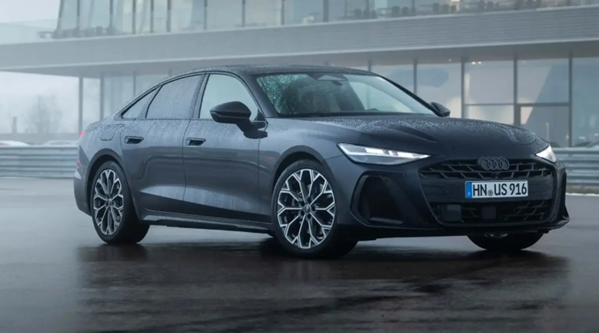
The new engine, set to launch in the A6 and Q5 models, combines a mild-hybrid system with an electric compressor that works alongside the traditional turbocharger. And although Audi has previously used 48-volt electrical systems, integrating an electric compressor into the airflow path after the turbocharger and intercooler represents an entirely new technological advancement for the company.
The concept behind this engine is simple yet highly effective: when the driver suddenly presses the accelerator—and before the traditional turbo has time to spool up—the electric compressor intervenes instantly to compress the air directly, delivering a strong and immediate boost that virtually eliminates the typical turbo lag.
According to Audi’s data, the electric compressor can reach speeds of around 90,000 rpm in just 250 milliseconds, producing up to 3.6 bar of pressure, which is a full second faster than the previous version. On the road, this translates into stronger initial acceleration—enough for the car to cover roughly the length of a full vehicle within the first two and a half seconds of takeoff.
The engine also relies on a 48-volt mild-hybrid system capable of providing an additional temporary boost of around 24 hp and 230 Nm during launch or sudden acceleration, enhancing the feeling of instant response.
Audi states that this technology makes the engine’s response feel remarkably similar to that of an electric vehicle in terms of immediacy and smooth power delivery—combining diesel strength with electric efficiency in a way never seen before.
Despite the significant decline faced by diesel engines due to strict European regulations and tightening emissions standards—and despite their market share dropping to just 8%, falling behind petrol, hybrids, and even plug-in hybrids—the diesel story is far from over. Audi, with its rich TDI legacy since 1989, its eight Le Mans victories, and bold experiments such as fitting a V12 diesel into the R8, is now proving that it still believes in the potential of diesel.
Its return with a 3.0-liter V6 diesel enhanced by electric assistance is more than just a technical update—it is a clear statement that diesel is still capable of evolving and writing a new chapter, rather than being erased for good.