Electric Vehicle Charging Stations in Jordan: A Comprehensive and Updated Guide for 2026
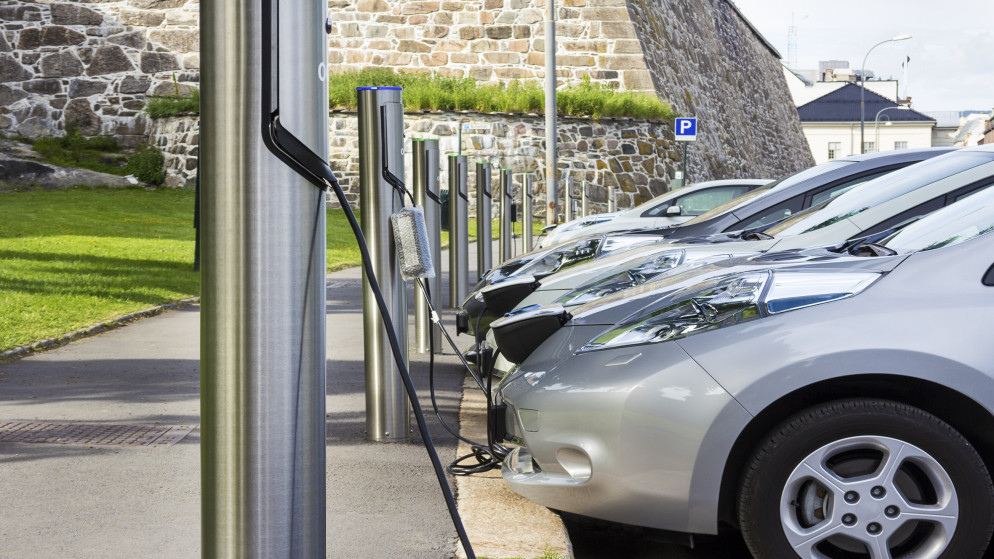
The transportation sector in Jordan is undergoing a clear and rapid transformation with the growing adoption of electric vehicles (EVs). The presence of EVs on the streets of Amman, Zarqa, and Irbid is no longer rare or exceptional; it has become a natural part of daily life. This shift is not spontaneous it is the result of accelerated development in infrastructure, supported by increasing investments and clear regulatory efforts aimed at facilitating the adoption of EVs and encouraging their widespread use.
By 2026, the focus has shifted from whether to own an electric car to how to optimize the charging experience. With the number of electric vehicles in Jordan reaching approximately 120,000, a well-structured charging infrastructure capable of supporting this rapid growth has become essential.
Evolution of EV Charging Infrastructure in Jordan
In recent years, Jordan has witnessed a remarkable expansion in its EV charging network, with over 450 licensed stations now operating across the country. This growth is no longer confined to the capital but extends to key highways and intercity routes, helping reduce range anxiety and increasing confidence in relying on EVs for daily commuting and long-distance travel.
This transformation became particularly evident in 2025 when the government and private sector completed a national plan to expand both public and private charging stations, covering major regions across the kingdom.
Beyond urban areas, the “on-the-road charging” concept ensures that a charging station is available every 70 to 100 kilometers on major highways, including Desert Road, Irbid Road, and the Dead Sea Road. This expansion strengthens intercity connectivity and facilitates long-distance travel.
Regulatory policies have played a pivotal role in accelerating this growth. The provision of charging points, particularly fast chargers, has become a requirement for licensing new projects, including fuel stations and major commercial complexes.
Charging Technologies and Local Compatibility
Jordan’s EV charging sector utilizes a variety of technologies to meet diverse user needs. Alternating current (AC) charging is widely used in homes and workplaces and is the most cost-effective option for daily use, despite requiring longer time to complete a full charge.
In contrast, direct current (DC) fast chargers provide practical solutions for rapid intercity travel, allowing a battery to charge from 20% to 80% within 30 to 50 minutes. With market development, some locations are now introducing ultra-fast charging technology, representing the next generation of infrastructure, though its availability remains limited.
Charging stations in Jordan support international standards such as Type 2, CCS2, and GB/T, ensuring compatibility with most EVs imported to the local market and minimizing technical challenges related to varied specifications.
Economic Cost of EV Charging
Economic considerations are among the strongest incentives driving consumers toward EV adoption in Jordan, and experience shows substantial benefits. Home charging allows users to cover up to 2,000 kilometers per month at a cost of approximately 43 Jordanian Dinars, especially when taking advantage of off-peak night rates.
By comparison, covering the same distance with conventional vehicles costs between 150 and 190 Dinars, highlighting significant long-term savings.
The kingdom has also implemented time-based tariffs, offering lower prices during specific hours, mainly from midnight to morning, enhancing energy management efficiency.
Public charging stations charge around 0.17 JOD per kilowatt-hour (including service fees), which remains lower than traditional fuel costs, though slightly higher than home charging. This clear cost advantage positions EVs not only as an environmentally friendly choice but also as a viable economic investment.
Digital Transformation and Its Role in Enhancing the Charging Experience
Access to charging stations no longer relies on guesswork; it has become part of a fully integrated digital ecosystem that allows users to manage their charging experience efficiently.
Modern applications provide up-to-date information on charging station locations, availability, and types of chargers, reducing the likelihood of waiting or interruptions. One of the most notable solutions is the Dooz app, which offers real-time updates to help users make quick and effective decisions while on the move.
Additionally, the Dooz app allows users to search for charging stations and filter results based on connector type, such as Type 2, CCS2, and GB/T, enhancing accessibility and improving the reliability of the overall charging experience.
Related: Electric Vehicle Charging Stations in Jordan: A Comprehensive Guide via the Dooz App
Current Challenges and Future Prospects
Despite significant progress, Jordan’s EV charging sector still faces challenges. Key issues include uneven station distribution, peak-hour congestion at certain locations, the need for unified payment systems, and improving network reliability.
However, these challenges are natural consequences of the sector’s rapid growth, reflecting increasing demand and wider adoption of EVs.
Looking ahead, the sector shows promising prospects, driven by the integration of renewable energy, smart charging solutions, expansion of ultra-fast charging technology, and the entry of new companies, enhancing competition and service quality.
Frequently Asked Questions
How much does it cost to charge an electric vehicle in Jordan?
Charging costs vary depending on location and time, with lower rates during off-peak hours and higher rates during peak hours.
Can hybrid vehicles be charged at EV charging stations?
Yes, plug-in hybrid electric vehicles can be charged at most public EV stations, especially Level 2 chargers.
How long does it take to charge an electric vehicle at public stations?
Charging time depends on the type of charger and battery size, with slow charging taking several hours and fast charging being much quicker.
Are all electric vehicles compatible with charging stations?
Most EVs are compatible with public chargers, but connector types and charging speeds may differ.
Can hybrid vehicles charge at fuel station charging points?
Yes, public EV chargers support plug-in hybrid vehicles, allowing them to charge efficiently.
What types of chargers are available in Jordan?
AC chargers for home and work, DC fast chargers for intercity travel, and some locations offer ultra-fast charging.
Are there apps to locate charging stations?
Yes, apps like Dooz, Sigma, and Google Maps provide information on station locations, availability, and connector types.
Is there a plan to expand EV charging stations in the future?
The government and private companies are working to increase coverage along main roads and cities.
Other Car News

Adoption of Electronic Licenses Over Plastic Ones and Ceasing Cash Payments at the Licensing Department
1 month ago

Cash Payments Phased Out as Driver and Vehicle Licensing Department Fully Adopts Electronic Payments Starting Sunday, August 2
1 month ago
By Government Directives.. Fuel and Gasoline Prices Fixed in Jordan for August 2026
1 month ago

Reduction of Tax on U.S. Vehicles to 16% Under Trade Agreement Between Jordan and Washington
2 months ago
Fuel Pricing for June 2026 in Jordan: Petrol and Kerosene Prices Frozen, Diesel Price Adjusted
3 months ago
After 7 Years of Market Education: How autoscore Led Jordan’s Shift Toward Scientific Vehicle Inspection
4 months ago
