BYD Wins Legal Round in Defender Design Dispute as The Hague Court Orders Jaguar Land Rover to Destroy Seized Files Within 24 Hours

China's BYD has secured a procedural victory in its legal dispute with Jaguar Land Rover (JLR) over allegations of design similarities between its SUV, the BYD Ti7, and the Land Rover Defender. The Hague District Court in the Netherlands has ruled that the legal seizure of files and data collected from BYD's offices in the Netherlands must be lifted, ordering Jaguar Land Rover to arrange for the destruction of the seized materials within 24 hours of formal notification of the ruling.
According to the ruling issued on November 11, 2026, and corrected on November 12, Jaguar Land Rover must instruct the court bailiff or the appointed data custodian to destroy the files covered by the seizure. The company must also provide BYD with independent confirmation that the destruction has been completed within 24 hours of its execution.
The court imposed a penalty of €50,000 for each hour of delay in complying with the order, capped at a total of €500,000, equivalent to approximately $550,000.
How Did the BYD and Jaguar Land Rover Dispute Begin?
The dispute stems from allegations made by Jaguar Land Rover against BYD concerning the Ti7, which is sold in China under the Fang Cheng Bao brand as the Tai 7. The British automaker claimed that the vehicle's design bears similarities to the Land Rover Defender and raised concerns about the possible use of reverse-engineering techniques during its development.
On August 14, 2026, Jaguar Land Rover obtained authorization from The Hague District Court to carry out a pre-judgment seizure of evidence and data related to the vehicle. The seizure was subsequently executed on August 24 at offices belonging to BYD Nederland and BYD Europe in the Dutch cities of Hoofddorp and Schiedam.
The seized materials included a wide range of documents, such as plans for launching the vehicle in European markets, marketing and distribution documents, financial and commercial information, as well as technical and engineering materials related to the vehicle's design and development, including drawings and digital models.
The collected data was held by an independent court-appointed custodian and was not handed directly to Jaguar Land Rover.
The Hague Court Lifts the Seizure of BYD Files and Rejects Jaguar Land Rover's Claims
The court's decision followed BYD's objection to the scope of the seizure. The Chinese automaker argued that Jaguar Land Rover's request covered confidential internal information that was not necessarily relevant to the dispute, including commercial information, investments, development plans, and internal research.
Jaguar Land Rover, meanwhile, justified its request by arguing that access to the data was necessary to assess the extent of the alleged infringement and the potential damages resulting from it.
However, the court found, at this preliminary stage, that retaining the files was not necessary to establish the allegations concerning the Defender's design. It also noted that BYD had not yet launched the Ti7 for sale or sold any units in European Union markets at the time the case was being considered.
Consequently, the court concluded that there was no demonstrable damage resulting from an alleged infringement in the European market that could be assessed through the seized information.
The court further determined that the possibility of a future infringement was insufficient, on its own, to justify continued seizure of the information. This led to the decision to lift the seizure and end the court-supervised preservation of the files.
The ruling went beyond ordering the destruction of the files. It also prohibited Jaguar Land Rover from continuing enforcement measures based on the earlier seizure authorization and imposed a separate penalty of €500,000 for each enforcement action carried out in violation of this order.
The court also rejected Jaguar Land Rover's request to impose penalties of €500,000 on BYD, concluding in its preliminary assessment that the Chinese automaker had fulfilled the cooperation obligations required of it during the seizure process.
The dispute also involved technical disagreements over access to computers, cloud storage services, Microsoft Purview, and the WeCom application. However, the court found that BYD had provided the required cooperation, while certain access and data-export procedures depended on technical permissions or capabilities that were not available to all employees at its European offices.
In the corrected ruling issued on November 12, the court ordered Jaguar Land Rover to pay €25,376.57 to BYD in legal costs, after correcting a clerical error in the original ruling that had incorrectly attributed the payment obligation to the Chinese automaker instead of Jaguar Land Rover.
Has the Defender Design Dispute Come to an End?
Although the ruling represents a procedural victory for BYD, it does not bring the dispute between the two companies to an end, nor does it constitute a judgment confirming that the Ti7's design does not infringe Jaguar Land Rover's intellectual property rights.
The British automaker is still pursuing the matter through separate legal proceedings. These include a case before The Hague District Court concerning the European Union registered design rights associated with the Land Rover Defender, as well as proceedings before the Rotterdam District Court involving copyright claims and allegations of unlawful design imitation.
As a result, the central question regarding the legality of the similarities between the two vehicles remains before the courts. The latest ruling does not constitute a final judgment resolving the underlying design infringement allegations.
BYD Ti7 vs. Land Rover Defender
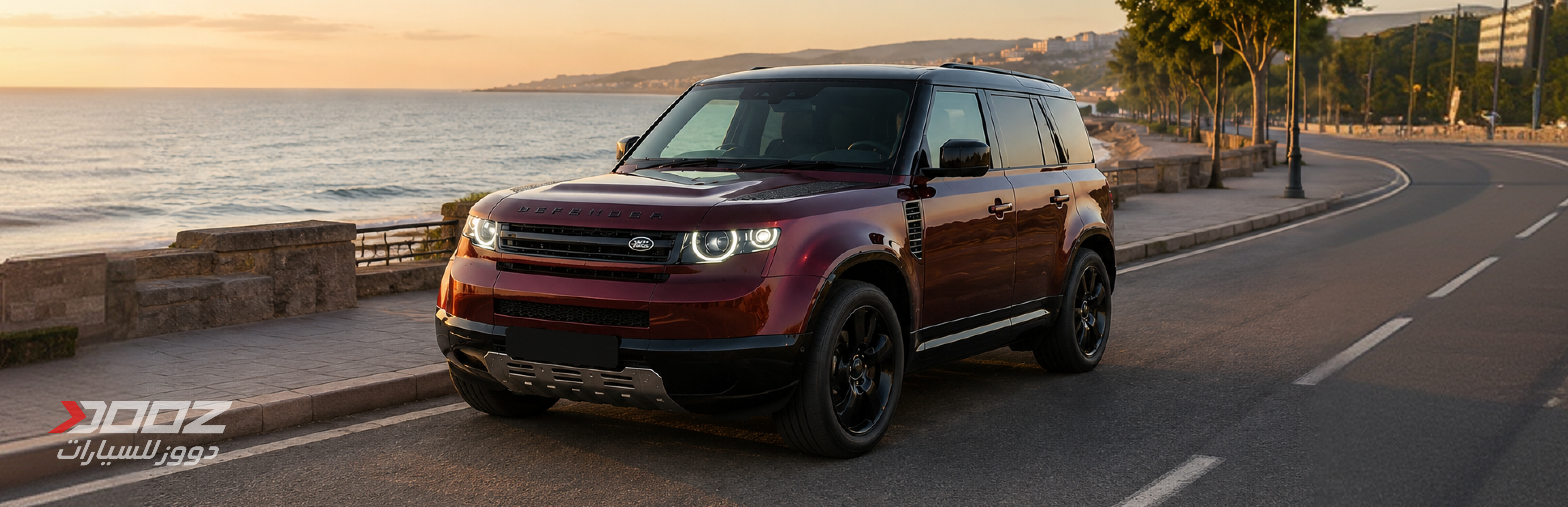
The dispute centers on the similarities alleged by Jaguar Land Rover between the design of the Ti7 and the appearance of the Defender, particularly their exterior styling and the boxy proportions commonly associated with off-road SUVs.
The BYD Ti7, known in China as the Fang Cheng Bao Tai 7, is one of the automaker's SUVs. Its design has sparked considerable discussion regarding its similarities to Land Rover models, particularly as BYD continues to expand its presence in European markets.
However, visual similarities alone do not determine the legal outcome. The case requires an examination of design rights, copyright protections, and whether the relevant legal protections apply to the specific design elements in question. These issues will be addressed through the separate ongoing court proceedings.
Conclusion
BYD has secured an important procedural victory in its dispute with Jaguar Land Rover after The Hague District Court ordered the lifting of the seizure of the Chinese automaker's files and the destruction of the court-held data within the specified deadline, subject to penalties of up to €500,000 for non-compliance.
However, the allegations concerning the alleged imitation of the Defender's design remain unresolved, leaving the dispute open before the Dutch courts. The future of the case will depend on the outcome of the separate proceedings concerning design rights and intellectual property.
To stay updated with the latest car news and information, download the Dooz Cars app.
Global Partnership Between BYD and Paris Saint-Germain Until 2029
3 months ago
How BYD Transformed from a Modest Startup into a Global Electric Vehicle Giant
4 months ago

BYD Recruits James Bond to Launch the Luxury Z9 GT with 5-Minute Charging Technology
7 months ago
