Apple vs. Google in the Race for Automotive Technology in 2026: Who Controls Your Car’s Screen?
7 months ago
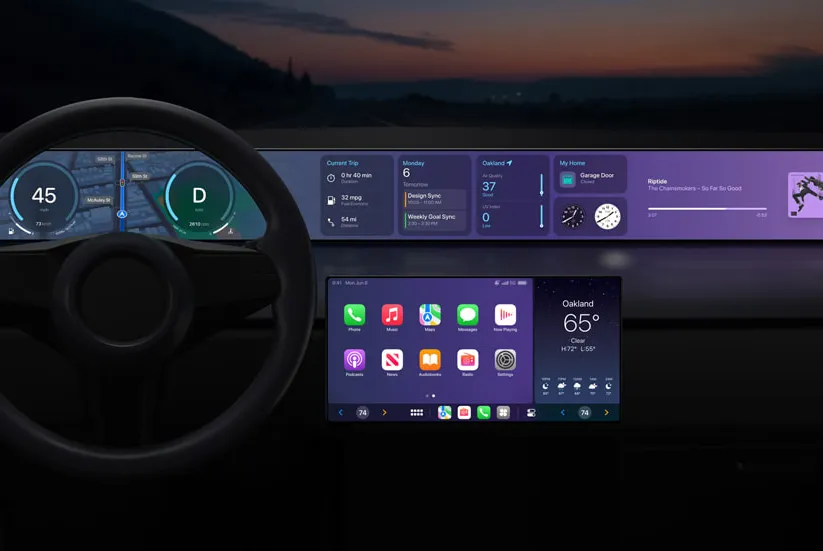
As we move into a new era of the automotive industry, the competition is no longer centered solely on engine power or acceleration. Instead, the real battle is about who controls the “brain” of the car and its digital screens. The cockpit has evolved into a fully connected digital platform, where tech giants Apple and Google are competing to dominate the operating system, data, and in-car services.
From Android Automotive powered by Google Gemini AI to the next-generation Apple CarPlay aiming to take over every screen inside the vehicle, control of the digital interface now means control of the driver’s experience, personal data, and the future subscription economy. While the industry benefits from continuous innovation and over-the-air updates, larger questions arise about privacy and data ownership. Choosing a car today is increasingly about choosing between two technology ecosystems rather than two traditional brands.
Android Automotive: The Operating System Driving the Competition
Android Automotive is no longer just a phone-mirroring solution like Android Auto. It has evolved into a fully integrated operating system that runs directly inside the vehicle itself. This transformation has given automakers greater flexibility to build a comprehensive digital experience without relying on a smartphone.
Global manufacturers such as Mercedes-Benz, BMW, Hyundai, Kia, Volvo, and even General Motors have adopted the system in their latest models. The appeal goes far beyond navigation or music streaming; it lies in the system’s robust and scalable technical infrastructure.
Android Automotive offers native Google Maps integration, a built-in app store, continuous over-the-air (OTA) software updates, and deep integration with Google’s cloud services. Together, these features make it an attractive platform for automakers seeking long-term adaptability and innovation.
The most significant leap in 2026, however, is the integration of Google’s generative AI, Gemini, directly into vehicle systems.
Google Gemini: A Brain for a Car That Thinks With You
With Gemini embedded in driving systems, the in-car assistant no longer performs simple commands like playing music or setting a destination. Instead, it understands context and analyzes driver behavior.
The system can recommend gas stations based on real-time fuel consumption, reserve restaurants along your route according to your preferences, and even assess your driving style to provide safety and efficiency suggestions. This marks the beginning of vehicles that “think with you” rather than merely respond to instructions.
Apple CarPlay 2026: A Strategy to Control Every Screen
Apple, on the other hand, has expanded its ambitions. The new generation of Apple CarPlay is no longer limited to the central infotainment display. It now extends across the entire digital instrument cluster.
CarPlay can control the speedometer, fuel and temperature gauges, and even the overall design of the dashboard interface. This expansion reflects Apple’s ambition to become the comprehensive digital interface of the car, not just an embedded application.
Apple is not simply seeking integration; it aims to redefine the visual and functional in-car experience according to its own design philosophy.
The Core of the Battle: Data and User Ownership
Behind this technological competition lies a deeper struggle over data. For CarPlay to display information such as vehicle speed or engine status, automakers must grant access to internal systems like the CAN Bus network.
Luxury brands such as Porsche and Aston Martin have embraced this full integration, believing their customers value a premium digital experience aligned with Apple’s ecosystem.
In contrast, General Motors has taken a different approach, discontinuing Apple CarPlay in favor of an Android Automotive-based system. The goal is to retain ownership of customer data and maintain control over future digital services.
Why the Fight Over the Car Screen?
The competition goes far beyond interface design or navigation. Modern vehicle systems collect extensive data, including daily destinations, driving habits, shopping locations, and fuel or energy consumption. This information represents enormous economic value for insurance providers, advertisers, and smart service platforms.
Additionally, cars have entered the era of the “subscription economy.” In 2026, features can be activated on demand, such as temporary performance boosts, advanced driver-assistance systems for specific trips, or premium comfort upgrades. The car’s screen has effectively become a new app store.
Moreover, the operating system strengthens ecosystem loyalty. If your car runs a fully integrated Android system, you are more likely to remain within Google’s ecosystem. If it relies on a complete CarPlay experience, you are drawn deeper into Apple’s world. The competition is ultimately about the user not just the vehicle.
The Future of Automotive Technology: Who Wins?
The automotive industry is undergoing a fundamental transformation. Vehicles are now connected smart devices, digital service platforms, and systems that continuously improve through over-the-air updates.
While this technological race has delivered advanced AI capabilities and intelligent navigation, it has also raised critical questions about privacy, data protection, and the growing influence of technology companies over everyday life.
In the end, drivers may benefit most from this innovation-driven competition. Yet the question remains: are we choosing a new car or choosing a technological ecosystem that will accompany us on every journey?
Other Car News

Car Prices in Jordan Surge Amid Strait of Hormuz Tensions
6 months ago
Automotive News
Jordan
See More
Jordan’s Car Market: Dealers Association Reveals the Truth Behind Prices and Inventory
6 months ago
Automotive News
Jordan
See More

Could the Iran War Spark a New Wave of Car Price Increases?
6 months ago
Automotive News
Middle East
See More

The Upcoming “Baby G-Class” or “Little G”: Not Exclusively Electric
7 months ago
Automotive News
Mercedes-Benz
See More
Jordan Baja Rally 2026 Kicks Off in Aqaba with Strong International Participation
7 months ago
Automotive News
Rally
See More
Autoscore Starts 2026 with a Global Record of Accreditations and Quality Certifications
7 months ago
Automotive News
AutoScore
See More
Toyota and Subaru Revive the Manual Transmission Experience in Electric Vehicles
7 months ago
Automotive News
Toyota
See More
