Jordan Studies Battery Passport System for Electric and Hybrid Vehicles to Track Batteries from Import to Recycling
Automotive News – Jordan
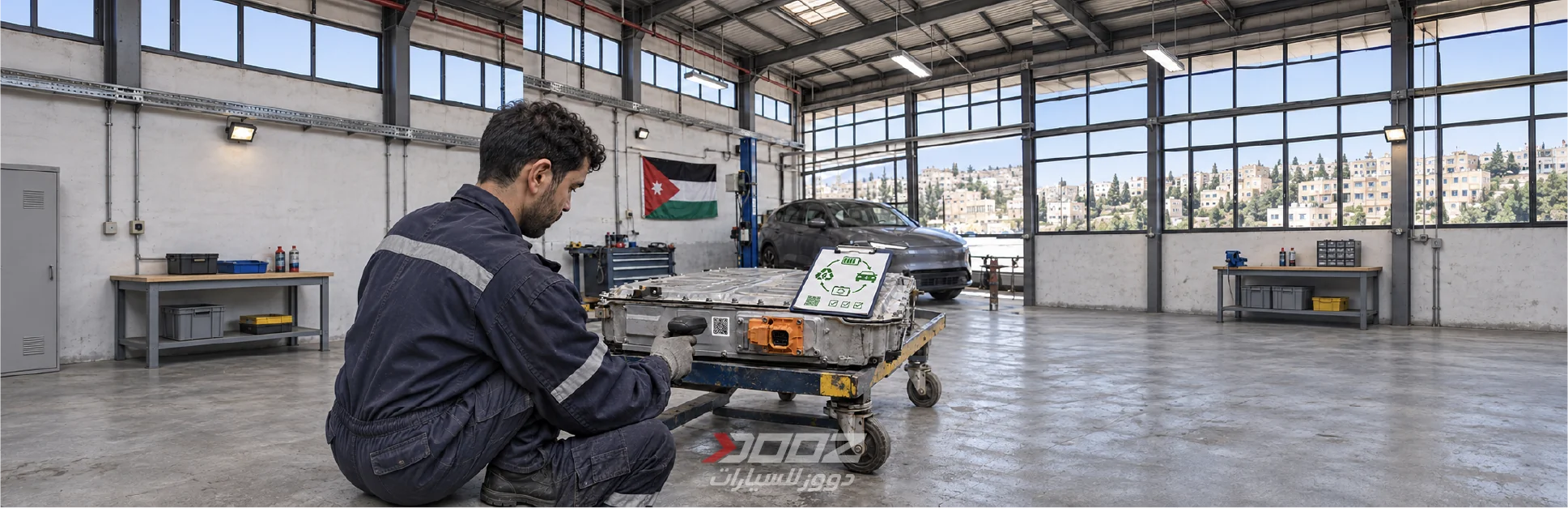
Jordan's Ministry of Environment has announced plans to study the introduction of a dedicated "Battery Passport" for every electric and hybrid vehicle battery in the Kingdom. The initiative aims to track each battery throughout its entire lifecycle, from importation, installation, and maintenance to decommissioning, disposal, and recycling, ensuring that batteries are handled in an environmentally safe manner.
The Ministry explained that the proposed battery passport system would assign each battery a unique identification record, allowing its history and handling processes to be tracked throughout its lifecycle. This would help improve battery waste management and reduce environmental risks associated with improper disposal.
Jordan Exported 720 Tonnes of Used Electric and Hybrid Vehicle Batteries in 2024
Regarding the management of used batteries, the Ministry of Environment stated that end-of-life electric and hybrid vehicle batteries are currently handled through four licensed entities authorized to receive them. The batteries are collected and then exported outside the Kingdom in accordance with the Basel Convention on the Control of Transboundary Movements of Hazardous Wastes.
The Ministry revealed that approximately 720 tonnes of electric and hybrid vehicle batteries were exported during 2024. It also highlighted the existence of a storage facility at the Hazardous Waste Treatment Center in Sawwaqa, equipped to receive batteries from electric and hybrid vehicles.
According to the 2024 hazardous waste inventory summary included in Jordan's National Hazardous Waste Management Plan for 2026–2030, the annual generation of used vehicle batteries, including lead-acid, nickel-based, and lithium batteries, reached approximately 14,679 tonnes. Meanwhile, the annual volume of treatment and exports amounted to 13,040 tonnes, leaving an annual gap of 1,639 tonnes.
Specialized Procedures for Handling Lithium Battery Incidents
As part of efforts to strengthen environmental safety and address the risks associated with lithium batteries, the Ministry indicated that standardized operating procedures have been developed in cooperation with the Public Security Directorate and Civil Defense.
These procedures outline the appropriate response to lithium battery incidents, including damaged batteries resulting from road traffic accidents.
The measures come amid the growing adoption of electric and hybrid vehicles, highlighting the need for specialized procedures to handle damaged batteries, including their collection, transportation, storage, and treatment in ways that help reduce fire risks and environmental pollution.
Jordan Plans to Expand Reverse Vending Machines for Plastic Containers
Separately, the Ministry of Environment is working to strengthen the principles of the circular economy and promote the digital circular economy by expanding the installation of Reverse Vending Machines (RVMs) at various locations across Amman, in cooperation with Amman Vision for Treatment and Recycling.
These machines accept used plastic containers (PET) in exchange for incentive points, encouraging consumers to return empty containers and contribute to recycling initiatives.
Amman Vision for Treatment and Recycling previously announced the installation of 15 reverse vending machines designed to collect plastic containers and aluminum cans, with plans to increase the total number to 200 machines over the next two years.
Second Phase of Jordan's National Waste Information Project
As part of its efforts to improve waste management across the Kingdom, the Ministry of Environment is preparing to launch the second phase of the National Information Project, which aims to record data related to waste, including quantities, types, and the facilities involved in its treatment and recycling.
The second phase will also include the automation of services related to waste management, helping improve the monitoring of waste collection, treatment, and handling processes while providing more accurate information to support environmental planning and decision-making in Jordan.
These initiatives reflect Jordan's growing focus on managing waste from electric and hybrid vehicles, alongside the increasing adoption of electric mobility in the local market and efforts to establish a more organized system for tracking used batteries, handling them safely, and ensuring their recycling in accordance with environmental requirements.
To stay updated with the latest car news and information, download the Dooz Cars app.
Jordan Raises Octane 90 and 95 Gasoline Prices: New Fuel Rates for November 2026
18 days ago
Adoption of Electronic Licenses Over Plastic Ones and Ceasing Cash Payments at the Licensing Department
3 months ago
Cash Payments Phased Out as Driver and Vehicle Licensing Department Fully Adopts Electronic Payments Starting Sunday, August 2
3 months ago
By Government Directives.. Fuel and Gasoline Prices Fixed in Jordan for August 2026
3 months ago
Reduction of Tax on U.S. Vehicles to 16% Under Trade Agreement Between Jordan and Washington
3 months ago