Chinese-Standard Electric Vehicles (GB/T) in Jordan: Charging Solutions, Adapters, and Modification Costs
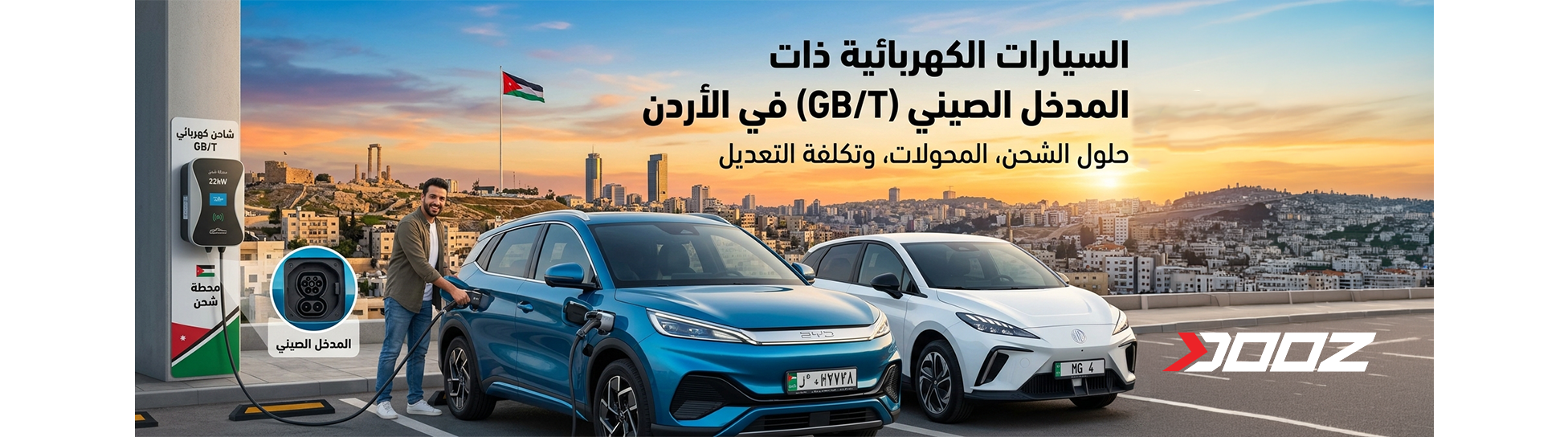
The rapid growth of the electric vehicle market in Jordan has led to the increasing presence of Chinese-imported EVs that use the GB/T charging standard. These vehicles are becoming more common, especially among imported used EVs, expat vehicles, and direct imports from China or re-export markets.
The GB/T charging interface differs significantly from the more widely used European standards such as Type 2 and CCS2. This difference has created practical challenges in charging infrastructure compatibility across Jordan, particularly in home charging and public charging stations in Amman and other cities.
As a result, topics such as charging solutions, adapters, and conversion costs have become essential for anyone owning or considering a GB/T electric vehicle in Jordan.
What Is the GB/T Charging Standard
GB/T is the official Chinese national standard for electric vehicle charging. It is widely used across China for both AC slow charging and DC fast charging, but its physical connector design and communication protocol differ from European standards.
In Jordan, most public charging stations are designed around Type 2 or CCS2 connectors, which creates a compatibility gap.
This means GB/T vehicles cannot directly connect to most chargers without additional equipment or adaptation solutions.
This technical mismatch is the core challenge facing GB/T EV owners in the Jordanian market.
Compatibility Challenges Between GB/T and Type 2 in Jordan
The biggest challenge for owners of GB/T electric vehicles in Jordan is the lack of direct compatibility with existing charging infrastructure.
Most charging networks in Jordan, particularly in Amman, rely on European standards. This means GB/T vehicles cannot simply plug into public chargers without an intermediary solution.
This creates a dependency on adapters, specialized cables, or dedicated home charging units. It also increases the complexity of ownership compared to vehicles using globally standardized charging systems.
Available Charging Solutions for GB/T Vehicles in Jordan
There are several practical solutions for charging GB/T electric vehicles in Jordan, each depending on usage needs, budget, and accessibility.
The most common solution is the use of charging adapters. These devices bridge the connection between Type 2 or CCS2 chargers and GB/T vehicle ports. They allow users to access public charging stations, although performance may vary depending on quality and power rating.
Another widely used solution is installing a dedicated home charging station compatible with GB/T vehicles. This option provides more stability and control over charging sessions and reduces reliance on public infrastructure.
A third option involves limited system adjustments or software-based compatibility solutions, but these are rarely used and usually depend on manufacturer approval or specialized service centers.
Charging Adapters for GB/T to Type 2
Adapters play a critical role in enabling GB/T vehicles to function within Jordan’s current EV ecosystem. They act as a physical and electrical bridge between incompatible charging standards.
However, not all adapters are equal. Low-quality adapters may support only slow charging or limited power output, while high-quality industrial-grade adapters support higher currents and more stable performance.
Safety is a key concern, as poorly manufactured adapters can lead to overheating, unstable charging, or communication failures between the vehicle and charger.
Therefore, selecting certified and high-quality adapters is essential for safe and reliable operation.
Home Charging Solutions for GB/T Electric Vehicles
Home charging is one of the most practical and widely recommended solutions for GB/T EV owners in Jordan.
This setup involves installing a dedicated wall-mounted charger that is compatible with the vehicle’s GB/T charging system. It allows users to charge their vehicles overnight with stable power delivery and minimal reliance on public stations.
However, home charging installations may require electrical upgrades depending on the household capacity. In some cases, upgrades to circuit breakers, wiring, or load management systems are necessary to safely support continuous EV charging.
Despite the initial setup cost, home charging remains the most convenient long-term solution.
Cost of Adapters and Compatibility Equipment
The cost of GB/T charging adapters varies significantly depending on quality, power capacity, and safety certification.
Basic adapters designed for low-power charging are relatively affordable but may not support fast charging or continuous high-load use.
On the other hand, high-end adapters capable of handling higher voltage and current levels are significantly more expensive but offer better safety, efficiency, and reliability.
In practice, adapter cost becomes an indirect but important component of total EV ownership cost for GB/T vehicles in Jordan.
Modification and Adaptation Costs in Jordan
Beyond adapters, owners may also face additional modification costs when adapting GB/T EVs to the local infrastructure.
These costs may include installing home charging stations, upgrading electrical panels, or modifying home wiring systems to handle higher electrical loads safely.
In some cases, professional installation services are required to ensure compliance with safety standards and prevent electrical overload risks.
These additional expenses vary depending on the property type and charging requirements, but they are an important part of the total cost of ownership.
Comparison Between GB/T and European EV Standards in Jordan
European-standard EVs using Type 2 or CCS2 connectors have a clear advantage in Jordan due to direct compatibility with most public charging stations.
GB/T vehicles, on the other hand, require additional equipment or adaptation layers, which increases complexity for the end user.
However, Chinese EVs using GB/T often offer better pricing, advanced features, and competitive specifications, which makes them attractive despite charging limitations.
This trade-off between affordability and infrastructure compatibility is a key factor in consumer decision-making in Jordan’s EV market.
The Future of GB/T Electric Vehicles in Jordan
The future of GB/T EVs in Jordan depends largely on the evolution of charging infrastructure and market adaptation.
As electric vehicle adoption continues to grow, there may be increased demand for multi-standard charging stations that support both GB/T and European standards.
Additionally, import trends suggest that Chinese EVs will continue to enter the Jordanian market in larger numbers, which may eventually push for wider support of GB/T compatibility.
Over time, the market may also see more universal charging solutions that reduce the need for external adapters.
Conclusion on GB/T Electric Vehicles in Jordan
Chinese-standard GB/T electric vehicles are becoming an increasingly important part of Jordan’s EV landscape. However, they introduce clear challenges related to charging compatibility and infrastructure readiness.
Owners typically rely on adapters, home charging stations, or electrical modifications to ensure usability within the local system. Each solution comes with its own cost and technical requirements.
Overall, GB/T EV ownership in Jordan is practical and viable, but it requires a clear understanding of infrastructure limitations and additional adaptation costs to ensure a smooth and safe charging experience.
